How to Rent Property to Bank in 2026: Documents, Benefits & Legal Tips
How to Rent Property to Bank in 2026: Renting your home to a bank can be an opportunity to earn steady income, a lower risk of vacancy and a long-term lease. If you wish to maximize your chances of getting reliable tenants such as banks, you need to know their requirements, make sure you are in compliance, and show your property in a professional manner, making the process smooth and clear and easy for everyone involved.
Essential Factors to Rent Property to Bank
Banks are highly-valued, stable tenants. But, their standards for rental properties are strict to ensure asset security, operational efficiency and Bank lease compliance India with regulatory requirements. Property owners must be ready to invest in property improvements, documentation as well as negotiations to find the most favorable contract.
Read More: New Rent Agreement 2025 Rules for Tenants and Landlords
Key Benefits of Lease Commercial Property to Bank
- Security for leases with a long-term term: Banks typically offer leases for 9-15 years. This can help you to prevent frequent turnover of tenants.
- Reliable, stable rent payer: As financially robust tenants, banks rarely fail to pay rent, ensuring you a steady monthly income.
- Low maintenance and vacancy risk: Banks maintain professional standards and can provide certainty in the occupancy of properties.
- Favourable lease terms: Often, banks sign triple net leases that cover the cost of insurance and property tax and occasionally maintenance, thus reducing the burden on you.
- Enhances your reputation: The option of leasing to banks will enhance the appearance of your property and can increase the market value of your property.
Read More: How to Rent Commercial Property Safely in India
Preparation Checklist for Rent Property to Bank
| Essential Factor | Actions Required or Notes |
|---|---|
| Property eligibility | Commercial space Accessibility, adequate space parking, visibility security |
| Documentation | Title deed, municipal approval, tax receipts, floor plans, insurance, NOC, owner ID, encumbrance certificate |
| Compliance & Approvals | RERA compliance, fire safety, legal clearance, building plan approval |
| Marketing/Outreach | Direct approach, advertisement for properties banks Agent services Proposal Cover letter with property summary rental conditions, market analysis, images |
| Negotiation | The rent rate and escalation provisions term, security deposits the maintenance share |
| Legalisation & Registration | Draft agreement Lease registration, draft agreement witnesses |
| Handover & Rent Collection | Document handover, inspection and banking of rent, maintenance response |
Steps to Rent Your Property to a Bank
Step 1: Assess and Upgrade Your Property for Bank Lease
Banks require properties that have:
- Sufficient carpet area (typically 1,000-4,000 square feet for branches, 50-150 sq feet for ATM)
- Potentially high footfall (city centers, commercial complexes, near transportation hubs)
- Secure structure, disabled access, parking spaces, ability for sign-writing and fitting-outs
- Clear title with no dispute with all permits and the payment of all dues.
Enhance curb appeal and fix any issues prior to marketing the Commercial property for banks. Talk to a local architect to confirm the building regulations and permitted usage.
Step 2: Documentation & Compliance Preparation
Gather all property documents needed for bank lease:
- Title deed (ownership proof)
- Approved floor and building plans
- Tax receipts (last 2 to 3 years)
- Certificate of encumbrance (shows that there are no obligations on the property)
- NOC from Housing Society or Local authority
- Insurance certificates and fire safety
- Address proof and owner ID
- All relevant municipal permits
Accessibility for disabled persons, fire safety and regulatory approvals are being increasingly mandated by banks. Properties that are not compliant are typically rejected, so make sure to verify everything prior to beginning outreach.
Step 3: Outreach and Marketing
Contact banks in a proactive manner by:
- Visit local branches and speak to managers
- Visit bank websites to find published conditions as well as application form (some have active branch/ATM expansion plans)
- Promoting your property on real estate websites featuring professional photos, complete information, and a thorough description that highlights bank-friendly features
- Contacting commercial leasing agents, and platforms (such as Goodtenent) to expand your access
Step 4: Submit Proposal & Apply
- Your proposal must be concise and professional.
- Cover letter stating intent along with contact information, and property summary
- Information about location, size of the property, layout, rent requested and amenities, closeness to important sites, security and parking.
- Supporting documents and photographs.
- Analysis of the market to support the rental price
- Status of legal and compliance
- Present the proposal in person either in person or via email or through designated application links on bank websites. Many banks post newspaper space requirements. You can monitor advertisements.
Step 5: Negotiation and Due Diligence
Banks conduct site visits and require modifications to:
- Facilities and security upgrades (e.g. strong rooms, CCTV, strong server rooms, fire safety)
- Reconfiguration of space or internal installation
- Rent negotiation (usually determined by local market rates - branches ranging from Rs 50 to Rs 500/sq ft ATMs range from Rs 60 to Rs 200/sq ft per month)
- Clauses of escalation (typical increase 5-10% per year)
- A clear and precise allocation of maintenance responsibilities
- A lease term of 9 to 15 years, along with fixed escalation, and the ability to renew it in a structured way, is standard.
Step 6: Legal Formalities and Lease Registration
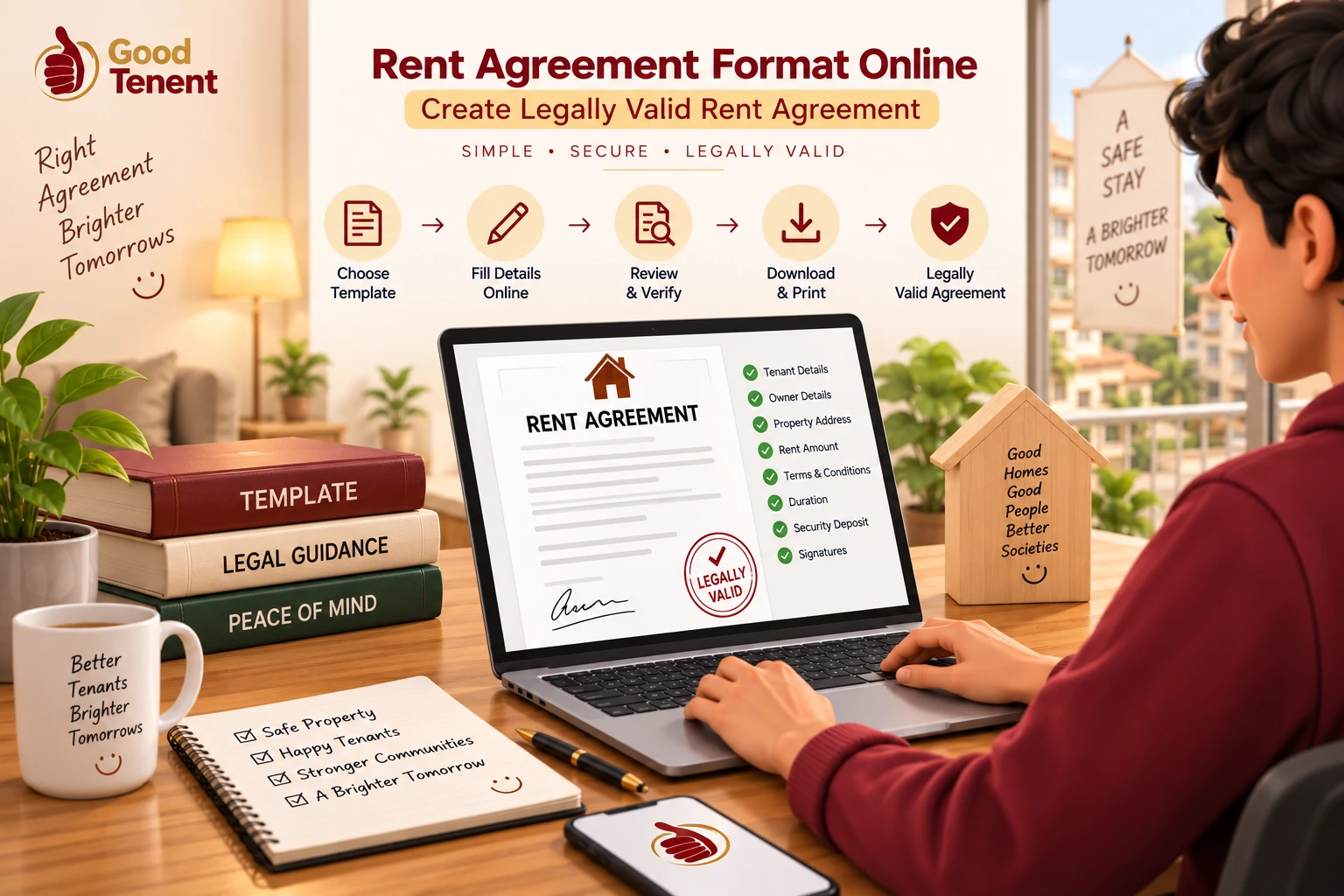
The Bank rental agreement format should include the following terms:
- Parties involved, details of the property
- Terms of rent and escalation
- Lease duration/renewal/termination clauses
- Security Deposit (usually 3-12 months' rent)
- Payment terms, penalties, maintenance division
- All compliance and legal responsibilities
- Sign the lease in your local Sub-Registrar's Office, with both parties as well as the proper witnesses.
Step 7: Handover and Ongoing Management
- Make sure the property is ready for handover, maintained and fitted with a security system that has been agreed upon and fit-outs.
- Handover in a formal manner, complete with formal inspection as well as exchange of documents.
- Rent tracking: Request monthly bank transfers (avoid Cash/Cheque risk).
- Keep in contact regularly, and provide prompt responses to maintenance and requests for compliance.
Read More: How to Create Rent Agreement Format Online
Special Cases: Leasing for Bank ATMs
The leasing of ATMs in small spaces is becoming more popular with banks preferring the ground floor locations in high-footfall areas. The rates for renting depend on the visibility, location, and accessibility. You have to submit a Bank ATM lease proposal request including all the property and compliance papers and provide ease of installation as well as maintenance.
ATM Leasing Models
- White-label ATMs: Owned by NBFCs Not banks. More regulatory steps.
- Brown-label ATMs: Equipment by third-party operations by banks.
- Franchise ATMs: Collaboration with service providers to provide the best location for bank branches.
Risks and Challenges
Lengthy bank approval times: The length of time for bank approvals can be affected by site visits, legal reviews, senior-level approval, as well as RBI signature-offs can lead to delays.
Terms of lease: Long tenure and binding clauses restrict the flexibility of renegotiation.
Property modifications: Costs and coordination for improvements, regulatory approvals or fit-out modifications.
Intense documentation scrutiny: The presence of historical or missing documents needed for bank lease can stop or disrupt discussions.
How GoodTenent Simplifies Renting Property to Banks
Want to rent your property to a bank but don't know how to do it, download the GoodTenent App, a secure platform for managing listings, tenant verification, and lease agreements all in one place. Different types of properties showcases in the Landlord's dashboard in the app which help to track inquiries, and communicate directly with potential bank tenants.
The app provides transparent communication between both the parties streamlining the entire rental process. This helps property owners save time, avoid paperwork hassles, and secure reliable long-term bank tenants confidently.
Download the Goodtenent App now to search reliable long-term bank tenants.
Frequently Asked Questions (FAQs)
1. What documents are needed to lease property to a bank?
You need title deed, compliance and municipal authorizations and tax receipts, approved plans and owner ID, insurance and fire safety documents as well as an encumbrance document and NOC (if appropriate).
2. What type of properties do banks prefer to have for ATMs or branches?
Banks want easily accessible commercial properties located in prime areas that offer ample parking, visibility, and features for compliance. For ATMs, ground-floor locations in areas with high traffic are the best.
3. How do I submit my property to a bank for lease?
Reach out to branch manager, reply to bank websites or online advertisements or register your space on portals, accompanied by detailed documents and a formal request.
4. What are the most common terms of a bank lease?
Lease terms of 9 to 15 years, renewal/termination clauses, annual increase (5-10 %), security deposits and split maintenance responsibilities are common.
5. Who pays for property maintenance and improvements?
It is possible to negotiate, however banks typically handle internal fit-outs and landlords handle the structural elements. It is important to clearly define the responsibilities in the contract.
6. What is the difference between leasing for an ATM rather than bank branches?
ATMs use a smaller amount of space and lease processes are similar however, the documents and upgrades can differ depending on the specific models (brown-label white-label, brown-label, franchise).
7. Do bank loans impact my property's value?
Yes, a long-term lease with banks can boost the value of your property and also provide a steady source of income, thereby improving the reputation of your property and its investment potential.
8. What happens if the documents or compliance are not complete?
Failure to comply could result in immediate rejection. Make sure you have all the paperwork updated and verified prior to submitting the proposal.
Sample Bank Rental Agreement Format
Cover Letter: The letter should state the intent of the writer, a summary of property and an appeal for consideration.
Property Information: Address, size, layout, condition, security features, amenities and photos.
Rental Terms: Period of lease, rent-asked, escalation, security deposit and maintenance cost-sharing.
Market analysis: Area rental trends and justification of competitive value.
Legal Conformity: List of documents including approvals and certificates attached.
Contact Information: Name, address, phone, email.