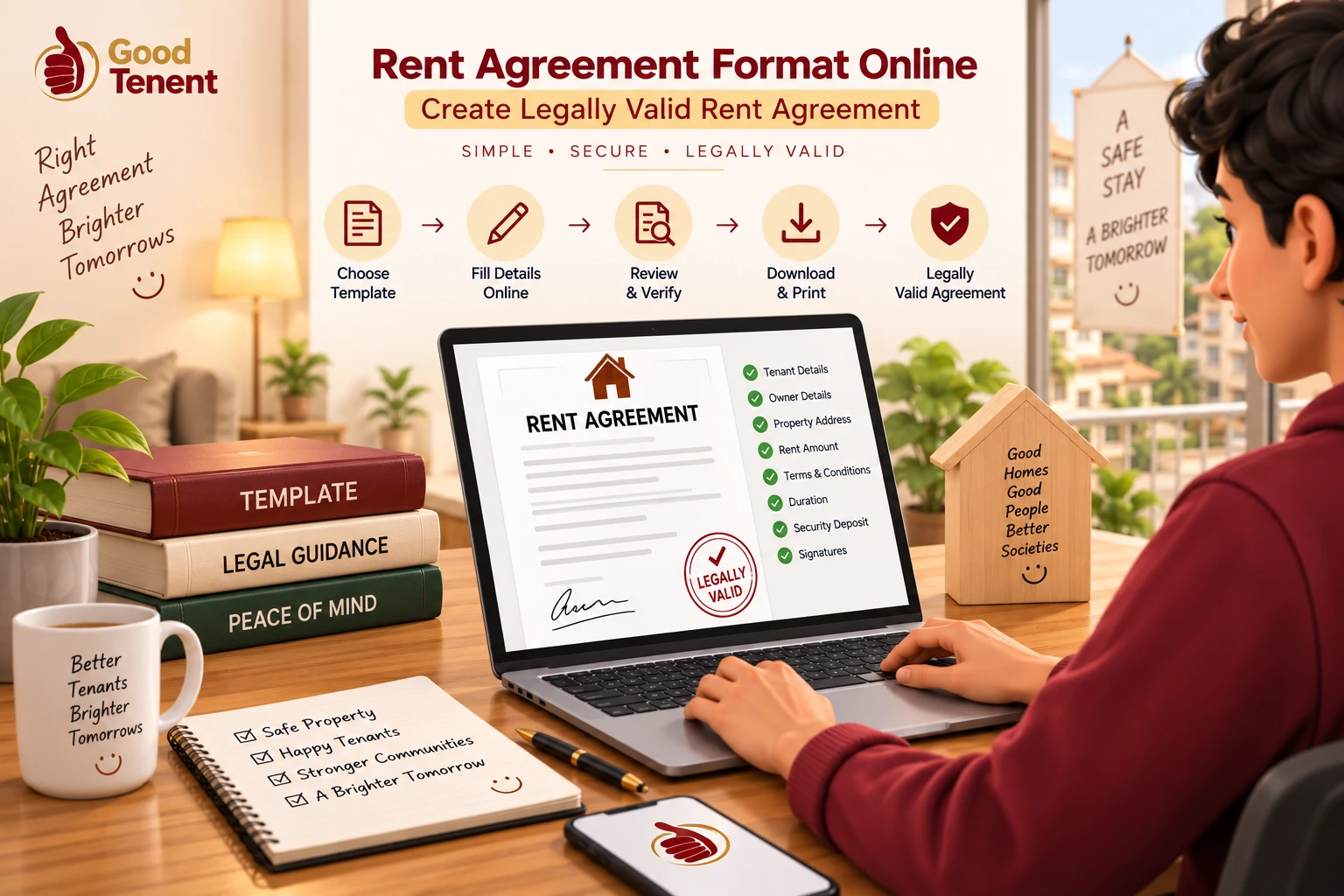

What are the New Rent Agreement Rules in India 2025?
Indian rental market is changing at a fast rate. From July 2025, New Rent Agreement Rules in India have changed the process of making and managing rent agreements between tenants and landlords. The regulations are aimed at digital compliance, standardized agreements and legal clarity, which will provide a safer ecosystem of renting to everyone.
The GoodTenent app would assist landlords and tenants to overcome these changes with ease, whether it comes to generating digital rent agreements to screening tenants and maintaining safe records.
1. Digital Stamping: Mandatory for All New Agreements
Before letting you know the new rules, let's first understand what digital stamping is. As opposed to the use of traditional stamp papers, digital stamps are issued online through recognised government sites with a special QR code or reference number which makes it legally binding and valid.
Rental agreements that are signed after July 1, 2025, will have to include a digital stamp. Old stamp papers will no longer be valid and failure to do so may cost a fine of Rs 5000.
Process:
- Create the agreement on a certified site.
- Check tenant and landlord information (Aadhaar/KYC).
- Stamp online full payment.
- Observe the QR-codified digital stamp to be used in an official manner.
GoodTenent Advantage:
- Generate digitally stamp agreements in minutes.
- This application legally applied government-approved e-stamps that are automatically used in the app.
2. Registration Rules: Agreements Beyond 11 Months
Any agreement that is over 11 months now has to be registered by the Rent Authority which is consistent with the Model Tenancy Act. This will make it legally binding, and minimize conflicts.
Additional Guidelines:
- The registration must preferably be carried out within 60 days of the execution of the agreement.
- There are states that demand a transparent account of contracts using a digital registry.
- Failure to comply can result in fines and legal harassment in enforcing contracts.
GoodTenent Features:
- Guides the landlords through the registration processes on a state-by-state basis.
- Stores all registered agreements in the app and has easy access to them.
3. Standardized Agreement Format & Compliance
The new rent agreement rules in India demand the agreements to contain necessary clauses:
- Rent and security deposits information.
- Maintenance responsibilities.
- Dismissal and renewal terms.
- Subletting permissions.
This is made easier by the GoodTenent App which offers pre-approved templates that address every legal requirement.
4. Penalties and Enforcement
- Non-digital agreements are subject to a fine of ₹5,000.
- More severe eviction rules for non-payment or abuse.
- Quick dispute resolution through Rent Tribunals.
- Certain states may impose higher penalties, e.g., Karnataka fines up to ₹50,000 for illegal subletting.
GoodTenent Tip:
Automated alerts notify renewals, rent defaults and legal deadlines to landlords and minimise risks and penalties.
Read More: How to Make Rental Agreements Legally Stronger with Digital Contracts
5. Tax Implications: Rental Income Compliance
In the Income Tax Act, the rental income is classified as the ‘Income from Housing Property’. TDS applies if annual rent exceeds ₹6 lakh (₹50,000/month).
- Keep accurate records of rent collected.
- Meet TDS regulations if applicable.
- GoodTenent helps to create reports and keep a history of transactions, so there is no need to worry about tax compliance.
State-wise Variations & Implementation Challenges
- These are different stamp duty and registration regulations in states.
- Some states follow the provisions of Model Tenancy Act differently, hence resulting in minor differences in compliance.
- They include issues such as infrastructure gaps, digital illiteracy, awareness and registration office backlogs.
Impacts & Implications
For Tenants:
- Enforceable agreements within laws.
- Understanding of rental conditions and deposit management.
- Reduced risk of invalid contracts.
For Landlords:
- More security and verification of tenants.
- Compliance costs go up and secures property against lawsuits.
Legal System:
- Reduced litigations and faster adjudication.
Rental Market:
- More trust and formalization of tenancy agreements.
Key Issues, Criticisms & Concerns
- Mandatory implementation: Will all states implement the rules in the same manner?
- Digital divide: The rural region can have a problem with stamping and registering online.
- Current agreements: The agreements made prior to July 2025 can be reviewed.
- Risks of non-compliance: There is a risk of some informal rentals going out of the new system.
Best Practices and Checklist for Landlords and Tenants
Step-by-Step Compliance Checklist:
- Make sure that all the agreements are digitally stamped.
- Register contracts that are above 11 months.
- Add necessary clauses: rent, deposit, maintenance, renewal, subletting.
- Full tenant KYC verification.
- Keep safe records of contracts and payments.
- Create alerts on renewals and notifications.
Template Tips:
- Apply ready-made digital templates such as those available in GoodTenent.
- Store copies of all contracts in cloud storage.
- Choose whether to renew at the expiry of the term or sign new agreements.
GoodTenent Advantage: Landlords can follow this checklist automatically adhered to with step-by-step instructions in the app, and ensure all the rules of the Indian 2025 rental laws are fully met.
Frequently Asked Questions:
Q1: Are all the rent agreements required to be digital stamped?
Yes, there is a requirement that all new agreements which are signed after July 1, 2025, be digitally stamped.
Q2: Can I still use physical stamp paper?
No, the physical stamp papers will not be legal in terms of entering into an agreement after July 2025.
Q3: Who pays the 5,000 fine on non-compliance?
It is the duty of the landlord to make sure that it is digitally stamped, hence the landlord is primarily responsible for the payment.
Q4: Are there any exemptions for small rental agreements?
Specific exemptions may apply; it's advisable to consult local regulations or legal experts for detailed information.
Q5: Do I need to register an 11-month agreement?
No, there is no need for registration of agreements up to 11 months. Contracts extending past 11 months are to be registered by the Rent Authority.
Conclusion
The 2025 rent agreement rules in India is one of the steps to the development of the rental sector. Digital stamping, standardized agreements, and legal clarity safeguard the interests of the landlords and the tenants.
Using the GoodTenent app, you will be able to create legal documents, verify tenants, store documents, and remain compliant all in one place.
Stay ahead of the 2025 rules—download GoodTenent today and experience hassle-free renting!