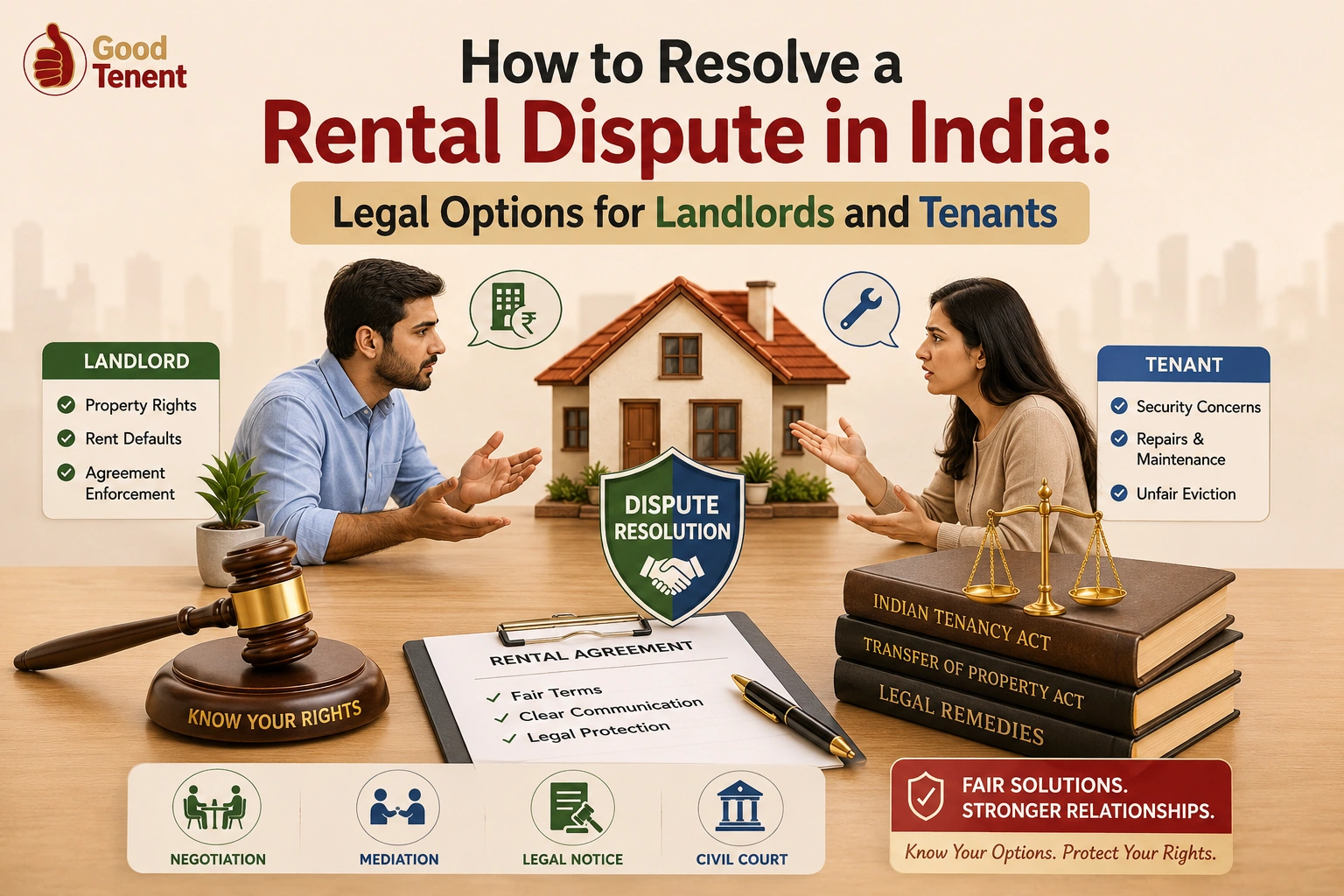
.png)
Tenant Rights vs Landlord Rights: Finding the Middle Path
Tenant Rights vs Landlord Rights: The rental property market survives on a fine line between the rights of tenants and the rights of landlords. The tenants and the landlords have their own needs and roles that should be respected to establish a healthy, transparent rental environment. Tenants desire to have affordable rent, security, and privacy, whereas landlords desire to receive payments on time, maintain their property, and adhere to the law.
This bond in India is regulated by a combination of state regulations, rental agreements, and emerging digital practices like online tenant verification. The problem with evading conflict and maintaining harmony is to first understand the rights of both tenants in India and the rights of the landlord in India.
Read More: What are the New Rent Agreement Rules in India 2025
What are the Tenant Rights in India?
Tenants are not only renters; they are stakeholders in the real estate ecosystem. The rights of tenants in India safeguard them against being exploited and secure them a good life. Some of the most significant rights are:
Right to Fair Rent
There should not be a random increase in rent. The rent control acts that most states have in place restrict rent increases and work against unreasonable demands on tenants.
Right to Privacy
The entry of the premises by a landlord without permission is not allowed. The tenants are entitled to quiet possession of the property.
Right to Essential Services
Basic needs are water, electricity, and sanitation. Even when there are disputes, landlords cannot terminate these services.
Right to Eviction Process
It is only due to the due process of law that tenants can be evicted. The forcible removal or intimidation is not legal.
Right of Refund of Security Deposit
Security deposit refund should be refunded, lessening the valid damages or dues. There is no permission to make arbitrary deductions.
Such rights will enable the tenants to live respectfully and with confidence.
What are the landlord's rights in India?
The rights of tenants are not the only ones, and landlords require the protection of the law. The rights of the landlords in India provide the landowners with assurance that they are not abused by careless tenants.These include:
Right to Timely Rent
Payment of rent can be done on time as required by the landlords in accordance with the rental agreement. Delays that are long-term can lead to eviction.
Right to Evict based on a Legal Ground
The tenants may not be able to pay rent, damage the property, or use it in illegal activities, which means that landlords may address the court seeking eviction.
Right to Maintenance of Property
The tenants should be in good condition of the property. Willful damage provides the right to compensation to the landlords.
Right to Decide Lease Terms
They (landlords) are allowed to prescribe in terms of duration, subletting, and alteration of structures as long as they are legal and agreed upon between them in writing.
Entitlement to Collect Security Deposit
Security deposits are used to secure against damages or unpaid debts. The landlords are allowed to deduct legitimate expenses, after which they will be refunded.
Learning about the rights of landlords in India assists property owners in protecting their investments as well as establishing a healthy relationship with their tenants.
Read More: What is Lock In Period in Rent Agreement
Tenant Rights vs Landlord Rights
The tenant rights and the landlord rights represent the issue of the choice between the right of a tenant to safe and fair housing and the right of a landlord to the rent and the right to secure his property. This equilibrium will make rental relations run smoothly. Here are some differences between tenant rights and landlord rights:
|
Features |
Tenant Right |
Landlord Right |
|
Rent |
Fair and reasonable rent; no arbitrary increases |
The right to get rent punctually as per the agreement. |
|
Privacy |
Right to privacy: the landlord is not allowed to enter without consent. |
Right to access property to make inspections/repairs with prior notice. |
|
Essential Services |
Right to water, electricity, and sanitation. |
obligated to give essential services without prejudice against misuse, which might be subject to legal action |
|
Eviction |
Right to protection against eviction that is unlawful or forceful. |
The power to evict at law when the tenant defaults, damages, or breaches. |
|
Security Deposit |
The right to the refund of the deposit based on valid deductions. |
The right to withhold the deposit or unpaid rent, other than damages, before a refund of the deposit. |
|
Property Maintenance |
Right to a safe and habitable environment. |
The tenants are expected to take care of the property and prevent deliberate destruction. |
|
Lease Terms |
Right to transparency on the lease period, rent, and liabilities. |
Entitlement to establish lease terms according to the law (duration, subletting, etc.). |
|
Dispute Resolution |
There is the right to rent courts or courts of law in case of dispute. |
Right to refer to courts or authorities to settle disputes with tenants. |
Read More: Lease vs Rent Agreement
Finding the Middle Path
A just rental system needs negotiation and understanding. These are some of the steps to practice:
Transparent Agreements
Indicate clearly the amount of rent, dates of payment, terms of deposit, repair arrangements, and termination. This avoids ambiguity.
Regular Communication
Landlords must be informed by tenants of any repair or payment problems. The tenants should be warned of the inspections or rent modification by landlords.
Use of Technology
Renting online, paying online rent, and the tenant Scorecard app help landlords and tenants background check effectively.
Dispute Resolution
Mediators or local rent authorities can assist both parties in solving the problem within a short period of time, as opposed to rushing to court.
Respect & Trust
A trust-based relationship guarantees tenancy, prompt rent, and properly maintained properties.
The Legal Landscape in India
The rental laws in India differ depending on the state; however, the Model Tenancy Act 2021 is seeking to harmonize the practice throughout the country. It promotes:
Along with the explicit contracts between the tenants and landlords.
Fair security deposit regulations (2 months for residential and 6 months for commercial).
Swift settlement of disputes by rent courts.
These guidelines will assist in striking a balance between the rights of tenants in India and the rights of landlords in India.
Also Read: Essential Clauses to add for a Foreign Company Tenant
Benefits of Striking a Balance
In cases where the rights of both parties are observed:
- The landlords have stable income, maintenance of their property, and fewer legal nags.
- Tenants secure and affordable housing free of harassment.
- Transparency, professionalism, and a reduction in disputes are positives to the market.
Conclusion
The answer to the fair and sustainable rental market in India is the finding of a balance between tenant rights vs landlord rights. Through open contracts, rental background checks, and respecting each other's duties, landlords and tenants will prevent disputes and create long-term and reliable relationships. As the digital tools and lawful systems take shape, the rental environment of India is shifting towards a win-win middle-ground approach for all.
Frequently Asked Questions (FAQs)
Q1. What are the tenant rights in India regarding rent?
Ans. The tenants are entitled to fair rent, privacy, essential services, security of tenure, and restitution of their security deposit.
Q2. What are the rights of landlords in India?
Ans. Landlords can obtain appropriate payment of rent, eviction based on legal provisions, property upkeep, security deposits, and enforcement of the terms of the lease agreement.
Q3. What is the benefit of a rental history check to landlords?
Ans. It assists the landlords in locating trustworthy tenants based on their payment patterns, past evictions, and rental trends.
Q4. What are the ways of resolving interpersonal differences between tenants and landlords?
Ans. Mutual communication, mediation, or legal remedy under the Rent Control Act or Model Tenancy Act can be used to resolve disputes.
Q5. What is the significance of having a balance between tenant rights and landlord rights?
Ans. It develops trust, ensures compliance, reduces conflicts, and results in a stable rental ecosystem.