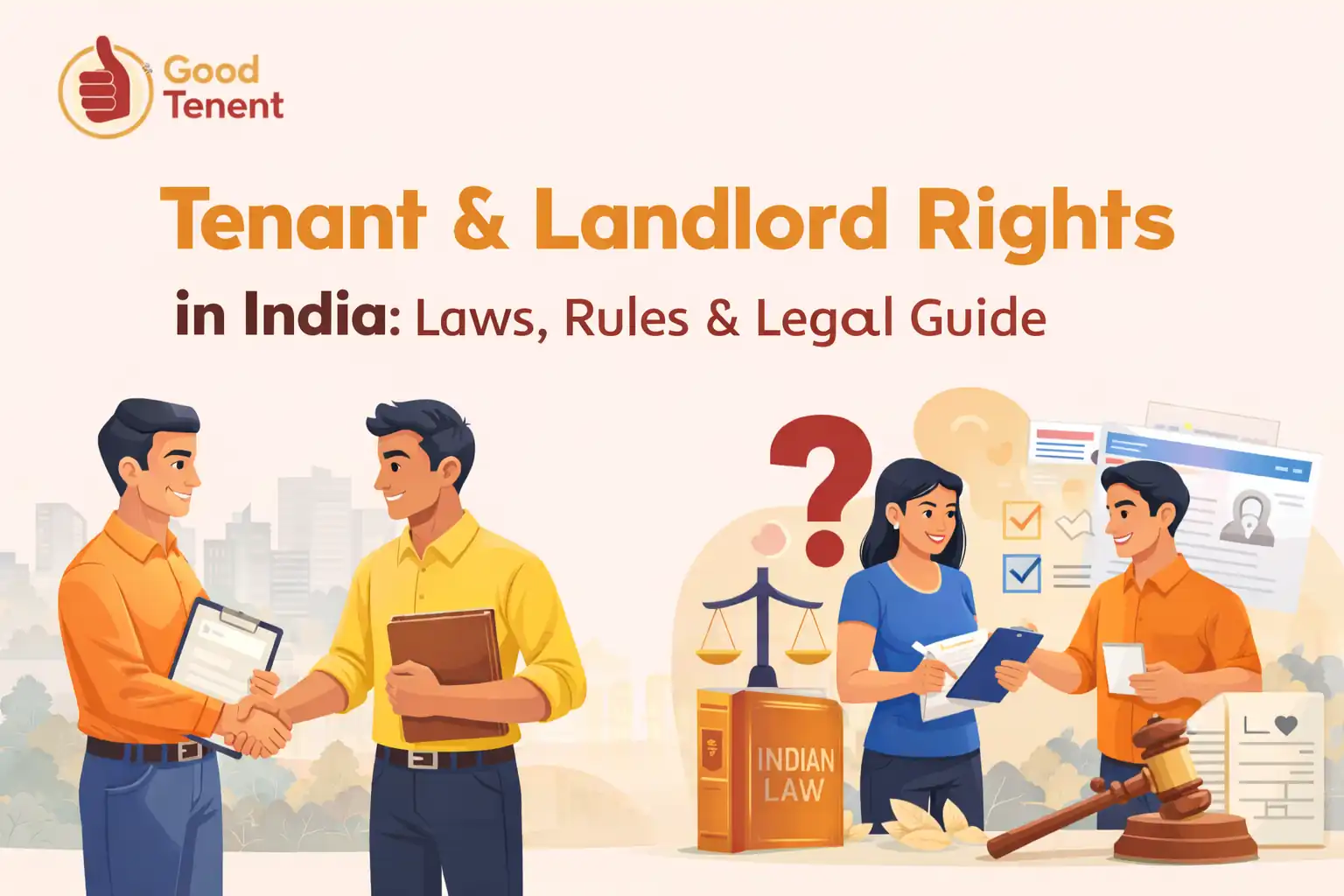
Tenant & Landlord Rights in India (2026): Laws, Rules & Legal Guide
The option of renting a home is among the most commonly used arrangement for housing today. But many rental agreements are made without comprehending the rights of tenants and landlords. These rights are important in ensuring a fair, transparent and legally secure renting process.
The legal rights of both landlords and tenants are certain. The tenants have the right to a safe and secure house and also privacy and protection against illegal evictions whereas landlords have the right to receive rent at the right time and also have their property in good condition.
Knowing tenant protection rights, landlord tenant laws, and rental agreement right can help avoid misunderstandings and disagreements. This guide explains the essential tenant rights guide, landlord responsibilities, and legal protections that apply in most rental situations.
Who is a Tenant in a Rental Agreement?
Tenants is the person who leases the property of the landlord for either commercial or residential reasons. The tenant will pay rent in exchange the right to live in this property during a specified time period, as specified within the agreement for rental.
The rental contract typically contains:
- The amount of rent and the payment timetable
- Duration of lease
- Security deposit information
- Responsibilities for maintenance
- Conditions for renewal or cancellation
These terms form the basis on which define the conditions and the rights of both tenants and landlords in a rental contract and make sure that both parties are aware of their obligations.
Why Understanding Tenant and Landlord Rights is Important
A lot of disputes between tenants and landlords result due to the fact that one or both parties aren't aware of their rights under the law. Being aware of landlord tenant laws assists in creating a fair relationship, and ensures both parties are treated equally.
Understanding these rights can help you:
- Guard tenants against unlawful eviction
- Make sure that your property is properly maintained
- Avoid landlord tenant disputes
- Guard your security deposits
- Keep clear rental agreements
A thorough knowledge of tenant protection rights and landlord rights and responsibilities ensures a pleasant renting experience for everyone involved.
Rights of Tenants in India
Numerous laws on rental protect tenants granting them the safety of their homes and decency in the course of lease.
1. Right to a Written Rental Agreement
A very significant rental agreement rights includes the ability to sign write a contract. It clearly defines the obligations of both tenant and the landlord.
It is typically comprised of:
- Rent payment terms
- The lease duration
- Security Deposit regulations
- Maintaining responsibilities
- The notice period for vacating
A written agreement can help prevent confusion and serves as a legal proof in case of dispute.
2. Right to Repairs and Maintenance
The tenants are entitled to live in a secure and well-maintained home. The big jobs are normally maintained by the landlord (electrical issues, plumbing, or building damage).
In case of repairing the tenant should make the landlord aware immediately so that the issue is corrected within a short time.
3. Right to Notice Before Eviction
According to the majority of tenant eviction laws landlords are not able to make tenants leave without a proper notice. A notice period should be provided prior to terminating the rental agreement.
This notice period gives tenants to find an alternative home and move out in peace.
4. Right to Reimbursement for Essential Repairs
In case the landlord is unable to fix the critical maintenance complaints that tenants are capable of undertaking minor repairs themselves. Under such circumstances the tenants may be in a position to deduce the expenses of repairing the property against rent or reimbursement.
The expense costs should be monitored by tenants in terms of receipts and documents.
5. Right to Privacy
Tenants have the right of staying in their rented house or apartment. The landlord cannot enter the property without giving any notice or without the consent of the tenant except in case of emergencies.
The tenant privacy rights should be observed since it is important to ensure that the trust that exists between the landlords and tenants is not violated.
Must Know: New Rent Agreement Rules for Tenants and Landlords
Rights of Landlords in India
Landlords are also protected by law to ensure their property as well as rental income. Knowing landlord rights in rental property is equally important.
1. Right to Receive Rent on Time
The landlord can be paid rents in keeping with the terms and conditions of the rental contract. In case tenants fail to pay the rent as frequently as possible landlords can resort to legal proceedings as per the lease agreement.
2. Right to Protect Their Property
The landlords expect tenants to care for the property with care. Tenants are advised to beware of causing damage or damaging the property.
If there is a significant damage the landlord can reduce repair costs from the security deposit of the tenant.
3. Right to Inspect the Property
The landlord has the right to periodically inspect the property to ensure that it is maintained correctly. But the landlord must notify the tenant prior to conducting inspections.
This is balancing the rights of the landlord to property in tandem with the tenant's right of privacy.
4. Right to Increase Rent According to Agreement
Rent increases can be increased by landlords during an extension of their rental agreement, if both parties are in agreement with the terms of the renewal. The terms for increasing rent are typically included within the lease contract.
5. Right to Evict Tenants for Valid Reasons
The insufficient rent payment or improper management of property are the valid reasons that cause the landlord to terminate the tenancy or the breach of the contract.
However, the evictions should be made in compliance with the due legal procedure on tenant eviction and the guidelines.
Tenant vs Landlord Rights: Key Differences
| Aspect | Tenant Rights | Landlord Rights |
|---|---|---|
| Primary Right | Right to live in a secure and habitable home | Rent to be paid on the date and time |
| Rental Agreement | The right to a written and clear agreement | The right to determine the terms of the rental agreement |
| Property Usage | The right to utilize the property throughout the lease | Right to define usage rules (no illegal use, subletting rules) |
| Maintenance | Right to request repairs or simple maintenance | Right to expect tenants to keep the cleanliness of their homes and to avoid any the possibility of damage |
| Privacy | Privacy rights The landlord is not able to be able to enter without an advance | Right to inspect property upon advance notification |
| Secure Deposit | The right to recoup the lease (with just valid deductions) | The right to deduct repair costs for damage |
| Rent Changes | Protect yourself from any arbitrary increase in rent during the lease | The right to increase rents in accordance with the agreed conditions |
| Eviction | Protection against sudden or illegal Eviction | Right to evict tenants due to legitimate legal justifications |
| Legal Protection | Protection of tenants under the tenant protection laws | Protection under the landlord and property laws |
| Dispute Resolution | The right to seek legal recourse in the event of discrimination | Legal action is available in case of non-payment, or for violations |
The most important takeaway
Rights of the landlord and tenant are created to give power to both parties. Tenants receive security and protection, while landlords have control of their property and the income they earn.
For deeper understanding:
-
Find out more details about rights of tenants in India
-
Learn more about information about the rights of the landlord
How GoodTenent Helps
Verifying the identity, background and documents of tenants allows cutting down on fraud to guarantee safer renting.
Tenant Verification Assistance- Assists landlords with verification of tenants according to legal stipulations.
Property Visit and Inspection Support- Arranging site visits allowing tenants to see the condition of the property, facilities, and environment before renting.
Digital Documentation Support- Helps in keeping good rental records and contracts in order to be legally clear.
Transparency among the Parties- Minimizes confusion in respect of rent, maintenance, and responsibilities.
Dispute Prevention- Effective verification and documentation would prevent landlord-tenant disputes.
Secure Renting Experience- Establishes a sense of trust by making sure a tenant and a landlord are verified and notified.
Speedier Checkout Procedure- Streamlines the verification and onboarding process and also saves time on both sides.
Quick Insight
GoodTenent does not only make renting easier, it facilitates the safeguarding of both legal rights of a tenant and a landlord by verifying, making it transparent and organized.
Conclusion
It is essential to know how to identify the rights of tenants and landlords in order to make a fair and safe contract with tenants. Privacy, safety and legal protection are the rights of the tenants, and the right of the landlords is to make sure that their property is safe and to get rent on time.
By adhering to landlord tenant laws, rights of tenant protection, and rights of rental agreement, both parties will be in a position to avoid conflicts and maintain transparency during the term of the rental contract.
Services such as GoodTenent help make the process much simpler by assisting tenants in confirming properties by visiting the property prior to signing a lease.
FAQs
1. What are the fundamental right of tenants?
Tenants are entitled to rights like secure living conditions and privacy and a written rental agreement as well as protection from unlawful expulsion. They can also receive a refund of their security deposit when the tenancy is over.
2. What rights do landlords have in a rental property?
Landlords have the right get rent at the time they are due and inspect the property on prior notice, secure your property from harm and expel tenants for legitimate reasons as per the lease agreement.
3. Can landlords enter the property without informing the tenant?
The landlord must give prior notice prior to entering a property that is rented. This safeguards the privacy of tenants and guarantees respect for the living space of tenants.
4. Why is a property site visit important before renting?
A visit to the property helps tenants to inspect the condition of the property along with the surrounding facilities prior to signing the rental contract. This helps reduce the chance of miscommunications later on.