DIY Tenant Background Checks in India: Free Methods, Their Limits, and When to Use a Verification Service
Quick answer: Yes, you can run a basic tenant background check yourself in India for free — verifying ID documents, contacting references, and checking rent history. What you generally can't do reliably on your own is confirm criminal records or past evictions, since India doesn't have a centralized, publicly searchable database for either. For those, you need police verification or a dedicated tenant verification service.
Here's a breakdown of what you can actually check yourself, where DIY runs out of road, and how to know when it's time to pay for a proper verification.
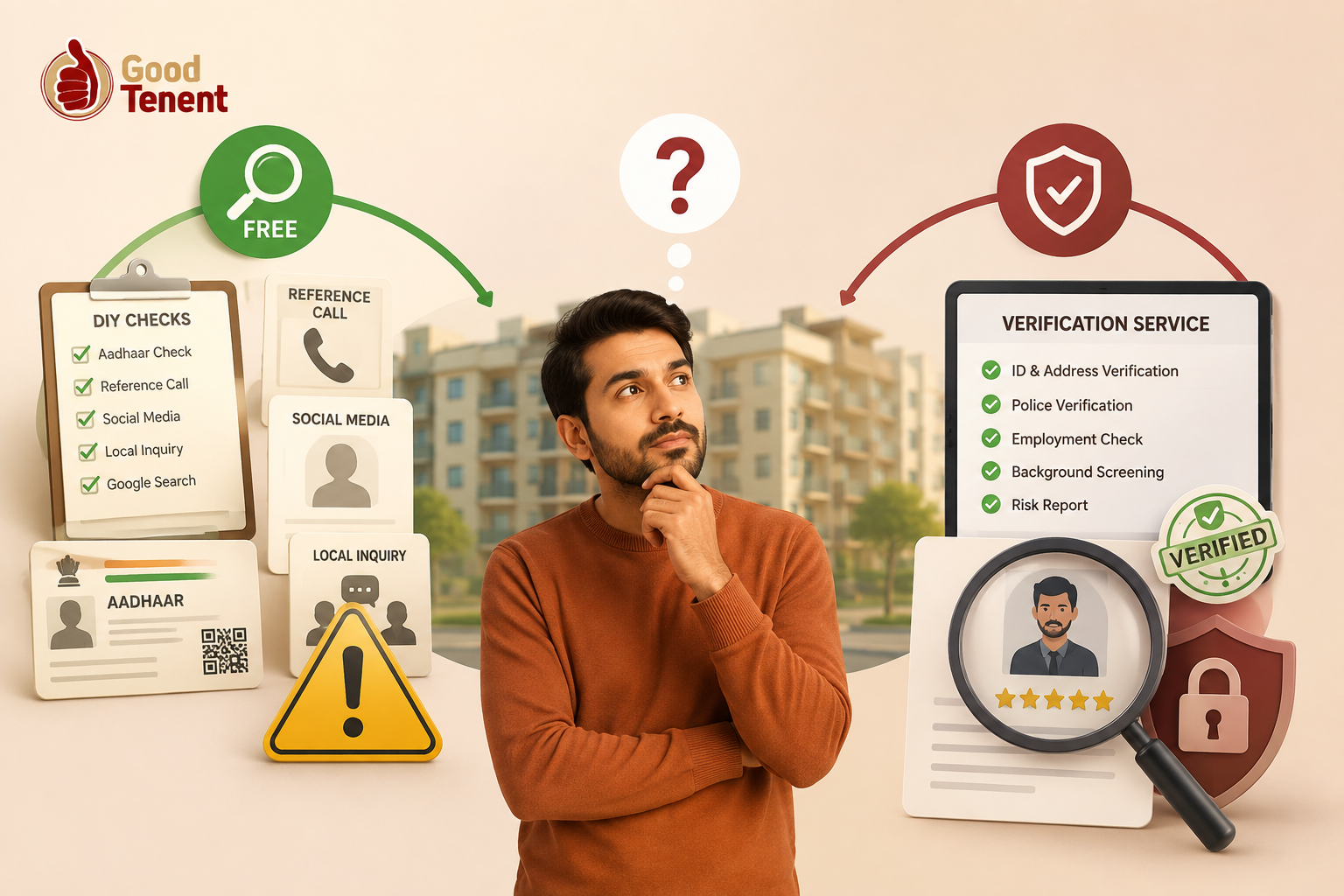
What You Can Check Yourself for Free
These methods cost nothing but your time, and cover the basics most landlords start with:
- ID and address proof verification — cross-check the tenant's Aadhaar, PAN, or passport against the details on their rental application. Confirm the photo matches and the address on the document is consistent with what they've told you.
- Employer and income verification — call the stated employer's HR or landline number (not just the tenant's given contact) to confirm employment and approximate salary.
- Previous landlord references — ask for the last landlord's contact and call them directly. This is one of the most reliable free checks available, since it comes from someone with firsthand experience.
- Rent payment history via receipts or bank statements — ask the tenant to share the last 3–6 months of rent payment proof from their previous residence.
- Social media and basic online search — a name and photo search can occasionally surface red flags, though this is the least reliable method on this list and shouldn't be treated as verification on its own.
- Self-reported credit score — you can ask a tenant to share their own credit report (many Indian credit bureaus allow one free check per year for consumers) as a starting point, though this depends entirely on the tenant's willingness to share it.
Where DIY Background Checks Fall Short in India
This is the part most guides gloss over, and it's worth being direct about:
Criminal record checks aren't something you can reliably self-serve. Unlike a simple document check, verifying a criminal record in India means going through the local police station's tenant verification process, or a database check run by a licensed verification service with access to government and law-enforcement records. There's no free public portal where a landlord can look up a person's criminal history nationally.
Eviction records don't work the way they do in other countries. If you've read US-focused background check guides, you'll see instructions like "search your county court's public eviction database." India has no equivalent — there's no centralized, searchable public database of eviction filings or judgments. Rental disputes typically go through Rent Control Courts or civil courts on a case-by-case, state-by-state basis, and these records generally aren't indexed or searchable online the way property or court case status trackers are for other legal matters. In practice, a previous landlord's direct account is the closest thing to an "eviction check" available in India — which is exactly why reference calls matter more here than in markets with formal eviction databases.
Rental history beyond what the tenant discloses is hard to independently confirm. You're relying on the tenant to tell you where they lived and who to call — there's no single database that shows a person's full rental history across India the way a credit bureau shows financial history.
Can I Check My Own Tenant Screening Report?
If you're a tenant rather than a landlord reading this, yes — this works both ways. Many verification platforms, including GoodTenent, let tenants request and view their own tenant report before applying anywhere. This is useful if you want to know what a landlord will see, correct any outdated information, or simply move faster by having a verified profile ready ahead of a house search.
DIY vs. Professional Verification Service
Here's how the two approaches actually compare once you get past the free/paid headline — see our full tenant background check service for what a complete check includes.
|
DIY (Free) |
Verification Service |
|
|---|---|---|
|
ID and address check |
Reliable |
Reliable |
|
Employer/income check |
Doable, time-consuming |
Faster, often verified directly |
|
Previous landlord reference |
Reliable if tenant cooperates |
Same, often more candid via a third party |
|
Criminal record check |
Not reliably accessible |
Through police verification |
|
Eviction/dispute history |
No central database exists |
Limited — relies on landlord references and disclosed history, same constraint applies |
|
Turnaround |
Depends on your own time |
Usually 24–72 hours |
|
Cost |
Free |
Paid (varies by depth of check) |
Worth noting: even a paid verification service can't manufacture an eviction database that doesn't exist — the real value of a service isn't inventing a shortcut around this gap, it's the police-verification access and structured process (identity, background, employer, and reference checks) done consistently and faster than you could manage alone.
When DIY Is Enough, and When It Isn't
DIY is reasonable when:
- You already know the tenant personally or through a trusted referral
- It's a short-term or low-stakes rental
- You have the time to make multiple reference calls yourself
A verification service is worth it when:
- You've never met the tenant and have no personal referral
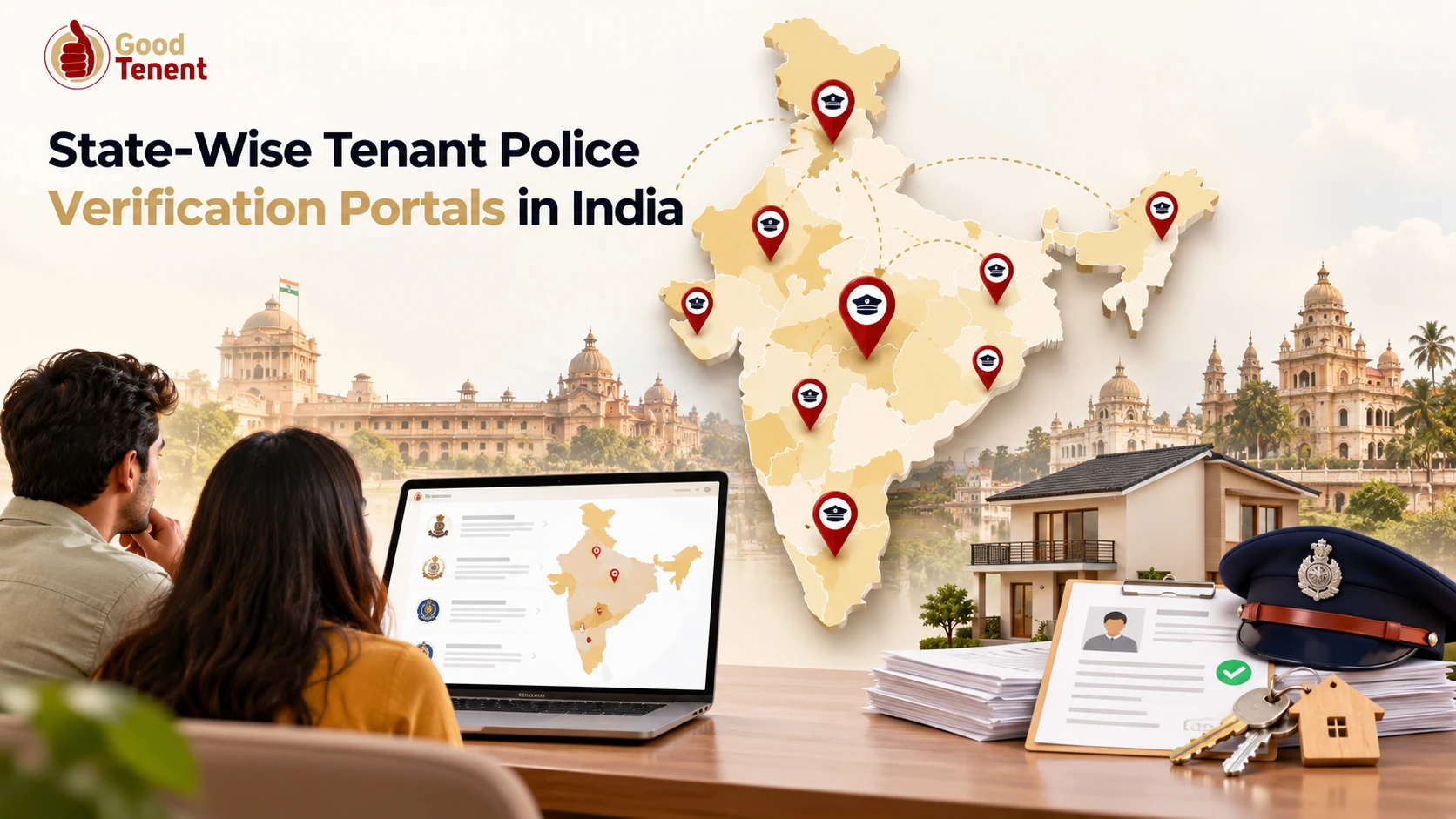
- Police verification is mandatory in your state/city (increasingly common — Rajasthan, for instance, has moved toward mandatory rent agreement registration alongside verification)
- You want a documented, dated report you can refer back to if a dispute comes up later
- You're managing multiple properties and don't have time to run reference calls for every applicant
For a fuller look at what a complete verification actually involves, see our guide on Tenant Verification Screening & Background Check in India, and for the police verification piece specifically, see Why Tenant Police Verification & Background Checks Are Essential.
Frequently Asked Questions
Q: Can I run a tenant background check myself for free in India?
Yes, for basics — ID verification, employer checks, and previous landlord references can all be done yourself at no cost. Criminal record and formal eviction checks are the parts that can't be reliably self-served.
Q: How can I check my own tenant screening report?
Some verification platforms, including GoodTenent, allow tenants to request and view their own report. This lets you see what a landlord would see and correct anything outdated before you apply.
Q: Is there a free way to check someone's rental history in India?
Not a comprehensive one. The most reliable free method is contacting the tenant's previous landlord directly, since there's no centralized database covering rental history the way a credit bureau covers financial history.
Q: Does India have a public eviction record database like the US?
No. Rental disputes in India typically go through Rent Control Courts or civil courts on a state-by-state basis, and there's no centralized, publicly searchable database of eviction records. This is one of the biggest differences from US-based background check guidance.
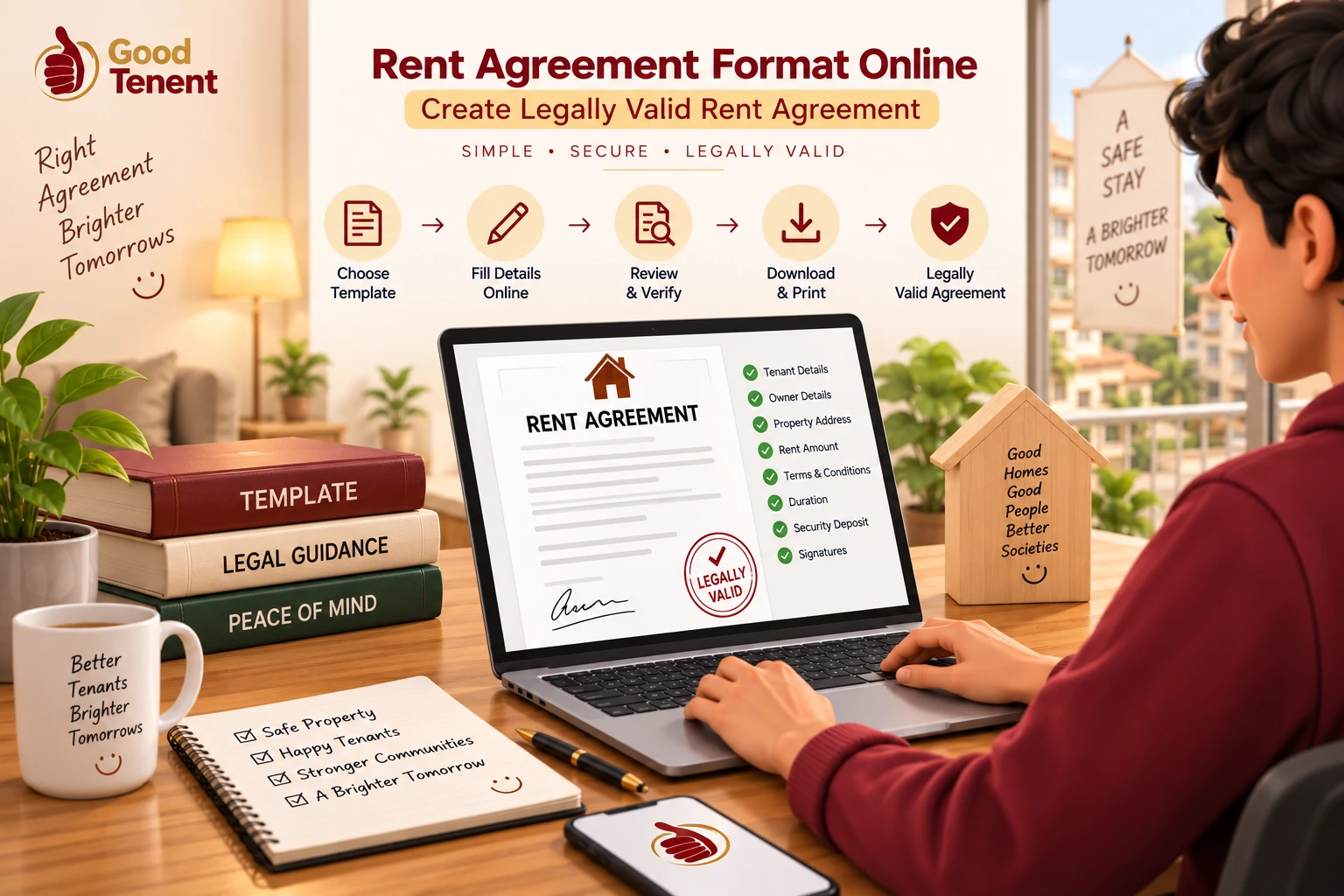
Q: Is a DIY background check legally valid for a rental agreement?
DIY checks don't produce a formal legal document. If your city or state requires police verification for rent agreements (increasingly common across India), you'll need to go through the police verification process specifically — a DIY reference check doesn't substitute for that requirement.