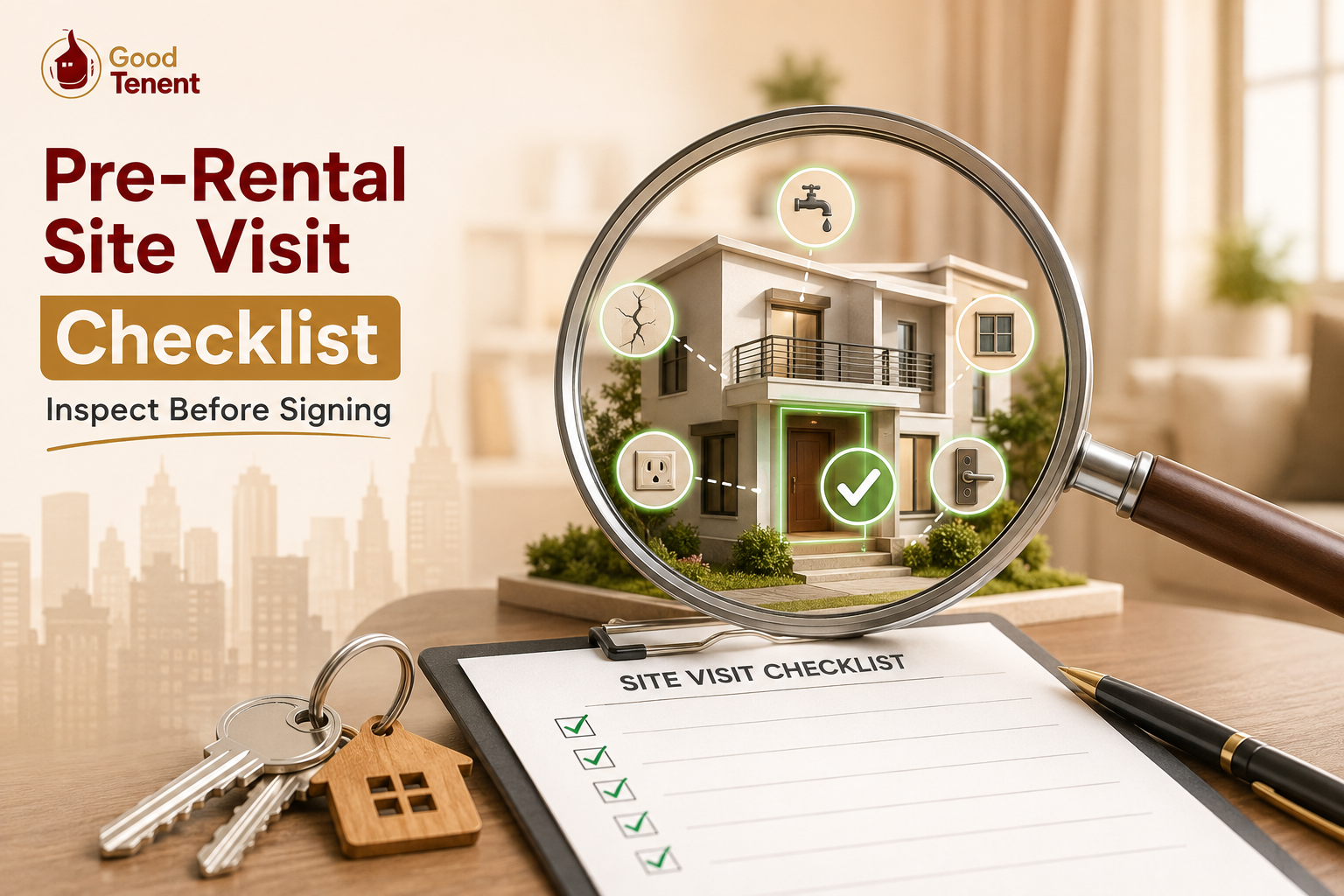
Pre-Rental Site Visit Checklist: Inspect Before Signing
Most tenants in India lose their negotiating power the moment they fall in love with a listing photo. By the time they're standing in the actual flat, they're mentally already moved in — and that's exactly when a leaking tap, a dead electrical socket, or a landlord's vague answer about the security deposit gets waved away as "we'll sort it out later." Later rarely arrives. Disputes over deposits, unrepaired damage, and "that wasn't mentioned during the visit" arguments are some of the most common rental conflicts in India, and almost all of them trace back to a rushed or incomplete site visit.
A thorough pre-rental inspection shouldn't be about being complicated -- it's about establishing a documented that is mutually accepted beginning point prior to money changing hands. This checklist outlines the steps to ask questions, test and document rooms by rooms to ensure that nothing is discovered after you've paid the deposit.
Why a Rushed Site Visit Costs You Later
A 15-minute walkthrough focused on "how does it look" misses almost everything that actually causes post-move-in disputes: water pressure, wiring load, seepage that's been freshly painted over, and verbal promises that never make it into the agreement. If you'd rather not manage this yourself, GoodTenent's verified site visit service sends a trained representative to inspect the property against a standardized checklist and share a documented report before you commit — useful if you're relocating from another city and can't visit in person more than once.
Before You Visit: What to Prepare
- Carry a phone with a working camera and a fully charged power bank — you'll be taking photos and videos of everything, including the "before" condition of every wall and fixture.
- Bring a simple mobile phone charger to test every electrical socket in the flat.
- Note down your must-haves vs nice-to-haves in advance — cross-checking a list on-site prevents the "I forgot to check that" regret.
- Ask for the visit at two different times of day if the landlord or broker allows it — more on why below.
The Complete Room-by-Room Inspection Checklist
Walls, ceilings, and flooring
Look closely at corners and near windows for damp patches, bubbling paint, or a slightly different shade of paint in one area — a common sign that a seepage issue was freshly painted over just before your visit. Tap on floor tiles at the edges. A hollow sound could be a sign of loose tiles that could break under normal use. Verify that the walls are level and the corner edges have a square shape, particularly when you are planning to put in modular furniture in the future.
Electrical system
Electrical system: Connect your charger to every outlet in your home even behind furniture that is easy to overlook. Check the number of points against your appliance needs — a common issue in older rentals is too few sockets for modern usage (AC, fridge, washing machine, router, and chargers on one circuit). Ask to see the main distribution board or meter box, and check whether wiring looks labeled and maintained rather than a tangle of exposed wires. Test every switch, fan, and light fixture that's included in the flat.
Plumbing and water supply Turn on every tap at once if possible and note whether pressure drops sharply — a sign of supply or pipeline issues that get worse in summer. Each toilet is flushed at least once to test the rate of drainage. Examine the sinks, and around the bottom of toilets for rusty patches, damp patches spots, or a niggling musty smell that usually indicates a long-lasting, slow leak, rather than a one-time leak. Be sure to inquire about the timing of water supply (24-hour or time-based) and if there's a backup tank, or booster pump, specifically in apartments on the upper floors.
Doors, windows, and ventilation Close and open every window and door fully. Damaged or swollen wood, misaligned frames or windows that don't latch are simple to fix now but costly to repair later. Verify that door and window locks are actually working, not just that they're there. Be aware of cross-ventilation and natural light depending on the time of day you're in the area, as the light levels vary significantly between the morning and evening.
Kitchen and included appliances If the flat comes semi-furnished or furnished, test every appliance that's supposed to be included — geyser, chimney, stove, modular fittings — rather than taking the broker's word that "everything works." Check under the kitchen sink and around the exhaust for grease buildup or leaks that suggest deferred maintenance.
Building and society common areas Check the condition of the lift, staircase, parking allocation, and security setup (guard, CCTV, entry logs). Ask current residents in the lobby or lift, if you get the chance, about power backup reliability, water supply consistency, and how responsive the society or landlord actually is to maintenance requests — this is often more revealing than anything the broker tells you.
Documents to Verify During the Visit
A clean-looking flat with an unverifiable owner is a bigger risk than a flat with a minor plumbing issue. Before you get emotionally attached to a property, confirm:
- Proof of ownership — a sale deed, latest property tax receipt, or electricity bill in the landlord's name.
- Power of Attorney, if the person showing the flat isn't the owner themselves.
- No-objection from the housing society, if one is required for new tenants.
- ID verification of the actual owner, not just the broker.
This is exactly the kind of check that's easy to skip when you're excited about a property and hard to unwind once you've paid a deposit to the wrong person. GoodTenent's due diligence checks verify property ownership and landlord identity before you commit, so you're not relying on a broker's assurance alone.
Day Visit vs. Evening Visit: Why You Need Both
A single daytime visit shows you the property at its best. Traffic noise, neighbourhood safety, parking availability, and water pressure all change by time of day — which is why a second visit, ideally in the evening, catches issues a morning visit never will.
| What to Check | Morning / Day Visit | Evening Visit |
|---|---|---|
| Natural light & ventilation | Best time to assess | Limited visibility |
| Traffic & street noise | Often quieter | Reveals real rush-hour noise |
| Water pressure | Baseline check | Peak-usage stress test |
| Neighbourhood safety & lighting | Not fully visible | Street lighting, foot traffic visible |
| Parking availability | May look open | Shows real competition for spots |
| Power backup / inverter | Hard to test | Useful during evening power cuts |
If you can only manage one visit, ask the broker or landlord pointed questions about the evening conditions rather than skipping the check entirely.
Red Flags That Should Make You Walk Away
Some issues are negotiable — a scuffed wall or an old paint job can be fixed with a documented agreement. Others aren't worth the risk, no matter how good the rent seems:
- The person showing the flat can't produce any ownership proof or POA, and gets evasive when asked.
-
Water seepage that is visible, extensive or structural cracks, which are considered to be "cosmetic."
-
There's pressure to make a payment for a booking or deposit before seeing the apartment in person.
-
A landlord who does not make verbal promises (repairs and appliances included and rent-lock periods) into a written agreement.
- Multiple recent tenants who left within a few months — often a sign of a maintenance or communication problem with the landlord.
What to Do If You Find Issues
The moment you discover a problem, it doesn't suggest that you're done it's a sign that you've got leverage. Take a photo and video of every problem with a timestamp and then send it to the broker or landlord via writing (WhatsApp or via email) before signing any document, to ensure you have an up-to-date report of the property's condition. You can use documents to negotiate A lower deposit, a repair week that is rent-free, or a specific repair clause with a date included in the written lease agreement instead of being verbal promises.
After the Visit: Before You Sign
- Match everything discussed — repairs, included fixtures, rent escalation, notice period — against the actual written agreement, not just what was said during the visit.
- Confirm how rent and deposit payments will be tracked, since UPI and bank transfer records are what protect you in a deposit dispute later. GoodTenent's rent wallet keeps a running, timestamped record of every payment for exactly this reason.
- If a dispute does come up after move-in despite your best documentation, having gone through a structured arbitration process is far faster than a civil court claim for a security deposit disagreement.
A thorough site visit takes an extra hour or two compared to a quick walkthrough. Given that a security deposit in Indian metros often runs two to three months' rent, that hour is one of the highest-leverage things you'll do in the entire renting process.
Once you've actually signed and moved in, the checklist doesn't end here — you'll want a documented move-in condition report and a plan for yearly inspections during the tenancy. Our rental property inspection checklist for move-in and annual checks picks up exactly where this one leaves off.
FAQs
Q1: What should I check during a rental property site visit in India?
Check walls and ceilings for seepage, test every electrical socket and switch, run all taps to check water pressure, flush toilets to check drainage, and verify the owner's identity and ownership documents before agreeing to anything.
Q2: Should I visit a rental property more than once before signing?
Yes. A single visit — especially a daytime one — misses issues like evening traffic noise, peak-hour water pressure drops, and street lighting or safety conditions that only show up later in the day.
Q3: What documents should I verify during a rental site visit?
Ask for proof of ownership (sale deed, property tax receipt, or electricity bill), a Power of Attorney if someone other than the owner is showing the flat, and any required housing society NOC.
Q4: What are red flags during a house rental inspection?
Major warning signs include an owner who can't prove ownership, visible structural cracks or heavy seepage dismissed as minor, pressure to pay before viewing the property, and refusal to put verbal promises into the written agreement.
Q5: Can I negotiate rent or deposit after finding issues during inspection?
Yes. Document every issue with photos and timestamps, share them with the landlord in writing, and use them to negotiate a lower deposit, a repair deadline, or a rent-free period until fixes are completed — ideally written into the rental agreement.
Q6: Is a professional site visit service worth it for renters?
It's most useful when you're relocating from another city and can't inspect the property in person, or want a standardized, documented inspection report before making a decision remotely.