Rental Property Inspection Checklist : Move-In, Yearly & Legal Rules
Once you've signed the lease and have the keys in your possession, the inspection hasn't ended, but it's only beginning another phase. An inspection for moving in creates a dated, recorded report of the condition of the property before you even unpack one box. Moreover, an annual inspection routine keeps the record up-to-date for the duration of time you stay there. Skip either one, and the most common rental dispute in India — arguments over what damage existed before the tenant moved in versus what happened during the tenancy — becomes very hard to resolve fairly.
Still deciding whether to take the property in the first place? That decision happens before you sign, and it deserves its own process — see our pre-rental site visit checklist for what to inspect, negotiate, and verify before you commit.
This guide covers what comes after that: your move-in condition report, the legal rules around inspections during a tenancy, city and municipal inspection requirements, and a yearly inspection checklist to keep the property — and the relationship with your landlord — in good shape for the full lease term.
Why Move-In and Yearly Inspections Matter
A move-in inspection is a dated record of the property's exact condition on the day you take possession — every scuff, crack, and non-working switch, logged before it can be attributed to you later. A yearly inspection during the tenancy does the same thing on an ongoing basis, catching maintenance issues early and giving both sides a shared, current picture of the property's condition rather than relying on memory months or years later.
Without this record, security deposit disputes usually come down to one person's word against another's. With it, both the tenant and landlord have dated evidence to point to, which is exactly what resolves these disagreements quickly instead of dragging into a dispute.
Must Read: What Is Included in a Typical Tenant Screening Report
The Move-In Condition Report: Your First 48 Hours
Do this before you unpack, ideally within the first day or two of getting the keys — not weeks later, once the property already has your belongings and daily use mixed into it.
Explore every room and take pictures of the ceilings, walls, and floors, paying particular attention to any cracks or stains. Also, look for damp patches. Switch on every fan, light, or plug to ensure that the electrical system is functioning exactly as it should. Test each appliance the property came with — geyser, AC, refrigerator, washing machine — rather than assuming they work because they're plugged in. Run every tap and flush every toilet to check water pressure and drainage.
Compile the photos and videos into a single dated file and share it with your landlord in writing — email or WhatsApp both work, as long as there's a timestamp. This single step is what protects your security deposit at the end of the tenancy, since it establishes exactly what condition the property was in before you moved anything in.
Must Read: Does a Long-Term Tenancy Give Ownership in India
Rental Inspection Laws in India
Inspections during a tenancy aren't left entirely to informal agreement — most state tenancy frameworks and the Model Tenancy Act set out baseline expectations:
-
Landlords are required to give adequate advance notice prior to visiting the property for inspection. A landlord entering the property without prior notice is a violation of their rights and is not a normal inspection.
-
Inspections must be scheduled at an acceptable time, generally during the daytime hours.
-
Tenants have the right to use the property in a peaceful, private manner of their property. Inspections aren't an excuse for repeated or disruptive inspections.
-
Inspections should only be for inspections of repairs, maintenance, as well as the overall condition of the building -- not a justification to observe the lifestyle of the tenant.
These rules are designed to make the process of inspection functional for both parties, not creating friction. If your rental agreement contains an inspection clause that is specific, it governs the specifics (notice time as well as frequency, etc.) so long it doesn't interfere with the tenancy laws of your state.
Read More: What Documents Are Required for Tenant Verification in India
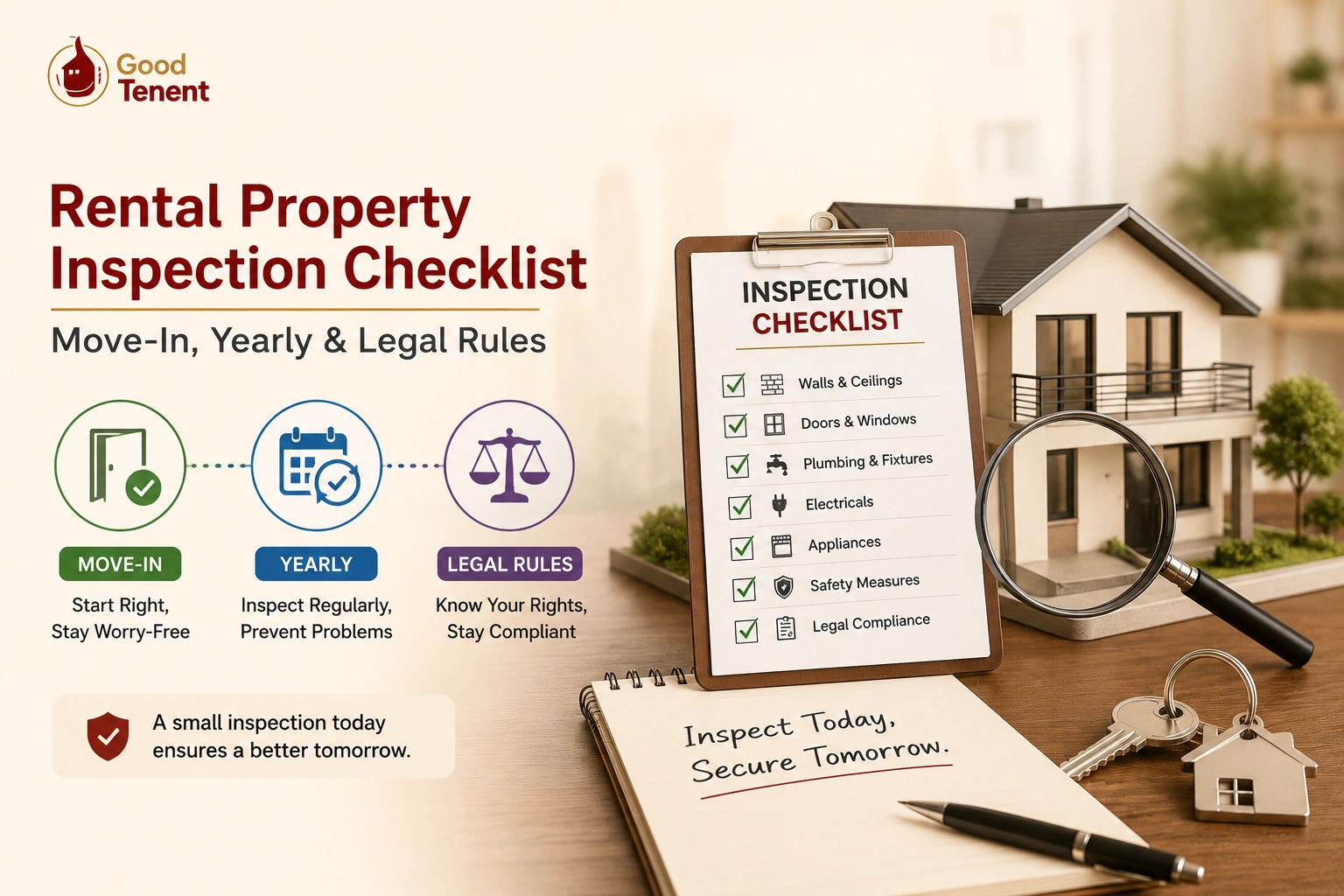
Move-In Inspection Checklist by Category
Use this as the structure for your move-in condition report photos and notes.
Walls and flooring — Check for cracks, peeling paint, damp patches, and stains on walls and ceilings. Inspect flooring for cracked or loose tiles and uneven sections.
Doors and windows — Confirm every door closes and locks properly. Windows should open, close, and latch smoothly, with no rust or damaged handles.
Electrical systems — Test every switch, fan, light fixture, and plug point. If appliances are included, switch each one on to confirm it actually functions rather than just being present.
Plumbing — Check tap water pressure, drainage speed in sinks and toilets, and look for leaks or water staining around pipes, sinks, and toilet bases.
Furniture and fixtures (if furnished) — Inspect beds, wardrobes, and shelving for existing damage, and check that handles and hinges function properly.
Photograph and date-stamp every item on this list, whether it's in good condition or not — a photo of an undamaged wall is just as useful as a photo of a cracked one when a dispute comes up later.
City and Municipal Inspection Requirements
In some cities, local municipal authorities can require a habitability or safety inspection of rental properties, independent of anything the landlord or tenant arranges privately. These typically check:
- Electrical wiring safety and load capacity
- Functional plumbing and sanitation
- Structural stability of the building
- Adequate ventilation and lighting
- Compliance with local housing and building codes
Not every city mandates this, and requirements vary significantly by state and municipal corporation. Regardless of whether a formal inspection is required, keeping the property compliant with basic safety standards reduces a landlord's legal exposure and directly affects tenant satisfaction and retention.
Yearly Rental Inspection Checklist
A single move-in inspection isn't enough for tenancies longer than a year. An annual walkthrough catches slow-developing issues — a small leak, gradually loosening electrical fittings, early-stage dampness — before they become expensive repairs or a point of dispute at move-out.
A typical annual inspection covers:
- Plumbing systems, checked specifically for slow leaks that wouldn't show up in a quick glance
- Walls and ceilings, re-checked for new cracks or moisture compared to the move-in photos
- Electrical fittings and included appliances, tested the same way as during move-in
- Furniture and fixtures, checked against their move-in condition
- General property maintenance and cleanliness
Landlords should give tenants advance notice before an annual inspection and schedule it at a mutually convenient time, in line with the inspection laws covered above. Comparing this year's photos against the move-in report makes it immediately clear what's normal wear and what's new damage.
Move-Out Inspection: Closing the Loop
The move-out inspection is where the move-in report actually pays off. Walk through the same checklist used at move-in, compare it directly against the original photos, and agree in writing on what constitutes normal wear versus tenant-caused damage before the security deposit is settled. Most deposit disputes happen when this comparison never happens formally — the landlord deducts an amount unilaterally, and the tenant has no dated baseline to push back with.
If the landlord and tenant can't agree on deductions, having gone through a structured arbitration process resolves it far faster than a civil court claim over a security deposit.
How GoodTenent Helps
Managing inspections well is easier with a system behind it rather than a folder of photos on someone's phone that's hard to locate six months later.
Site Visit Service — GoodTenent's Site Visit service lets landlords request a professional, documented inspection of their property before, during, or between tenancies — particularly useful for landlords who don't live near the property and can't inspect it in person themselves.
Digital Rental Agreements — Building an inspection clause and a documented move-in condition report directly into a digital rental agreement means both sides have a single, dated reference point instead of scattered messages.
Wallet — Tracking rent and deposit payments through GoodTenent's Wallet gives you a timestamped payment history that complements your inspection records if a deposit dispute ever comes up.
Final Thoughts
An inspection for a rental property isn't just an annual checkbox to mark at the time of move-in. It's an obligation that safeguards the landlord and tenant for the duration of the lease. Make sure to document the property in detail as you move in. do a softer version of the check each year, and follow the same checklist each time of departure to pay the deposit, without any having to guess.
By using the GoodTenent App, the management of inspections, agreements, and payment records remains in one location instead of being scattered across multiple messages and memories.
FAQs
1. What is a rental property inspection checklist?
A checklist for inspection of rental properties is a pre-planned list to keep track of the property's condition when it is occupied, at the time of periodic inspections, and after moving out. It covers plumbing, walls, electrical systems, as well as furniture. It also serves as a reference point that is current for both landlord and tenant.
2. Are there any laws governing inspections of rental properties in India?
Yes. The majority of state-based tenant agreements require landlords to provide advance notice prior to an inspection, schedule it for an appropriate time and limit the visit to examining repairs and the condition of the property instead of monitoring the tenant.
3. What is a city or municipal inspection for a rental property?
A city inspection is a safety and habitability check carried out by local authorities in some municipalities, covering electrical wiring, plumbing, structural stability, and ventilation, independent of any private inspection arranged between landlord and tenant.
4. What should a yearly rental inspection checklist include?
An annual inspection should re-check plumbing for slow leaks, walls and ceilings for new cracks or dampness, electrical fittings and appliances, and furniture condition — compared directly against the move-in report to distinguish new issues from normal wear.
5. How does a move-in inspection protect my security deposit?
A dated, photographed move-in report establishes the property's exact condition before you moved in, giving you evidence to dispute unfair deductions at move-out by comparing the two sets of photos directly.