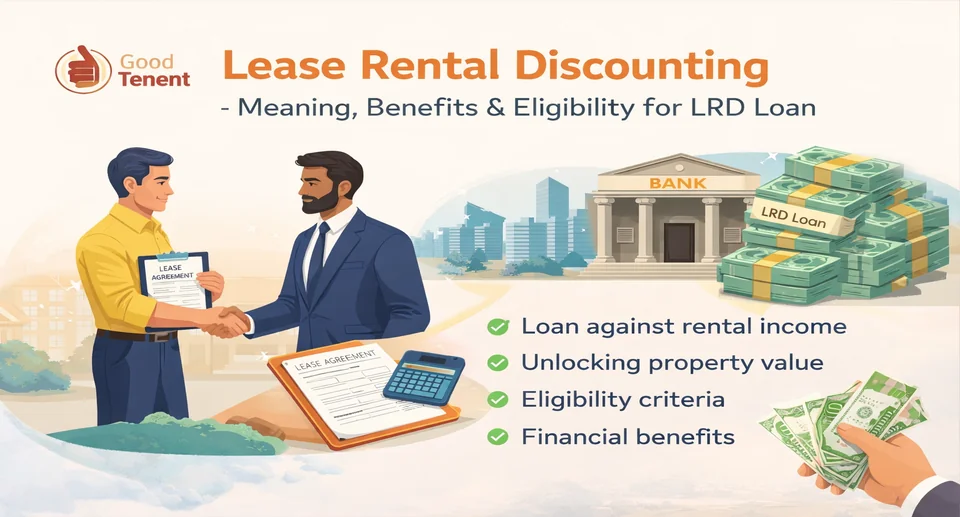
Lease Rental Discounting - Meaning, Benefits & Eligibility for LRD Loan
In the field of real estate commercial finance, Lease Rental Discounting (LRD) has emerged as a viable option for financing for homeowners. If you have a commercial property that is let to tenants and produces rent on a regular basis, you could make use of that rental income to get loans from bank or other financial institution.
Lease rental discounting loans allow property owners to maximize the potential value of their rental earnings without the need to sell the property. Instead of waiting for rent payments to be paid over many years, lenders can provide an initial loan that is based on the discounted amount of rent receivables to be paid in the future.
This type of financing has become more popular with business owners, investors and commercial property owners who are looking to get capital fast. In this article we'll explain what lease rental discounting is, how LRD loans work, benefits, eligibility criteria, and the documents required to apply for an LRD loan.
Overview of Lease Rental Discounting
|
Key Factor |
Details |
|---|---|
|
Loan Type |
A secured loan to cover future rent income |
|
Collateral |
Future rent and lease agreements |
|
Loan Tenure |
Typically, 5 to 15 years old |
|
Interest Rate |
Usually, they are less expensive than loans secured |
|
Loan Amount |
Based on a discounted future rent |
|
Repayment Method |
EMI that is paid via rental income |
Read More: What Are Rental Concessions
What is Lease Rental Discounting?
Lease Rental Discounting (LRD) is a kind of loan provided by financial institutions and banks which allows property owners to borrow funds in exchange for their potential rental revenue earned by their property that they lease.
In simple terms, if you own an industrial property that is generating frequent rent payments from tenants, then a loan provider will offer loans based on anticipated rent you can expect to get in the future.
The LRD loan amount is calculated using:
- Future rent receivables
- The value of the property
- The creditworthiness of the tenant
- The remaining lease periods
This creates leasing loan discount-on rental an excellent option for financing for investors looking to create liquidity without selling their real estate properties.
Read More: How to Rent Property to Bank in 2026
How Does Lease Rental Discounting Work?
The procedure of leasing credit financing for rental typically includes three parties:
- The owner of the property (borrower)
- The tenant who leases the property
- Banks or Financial Institutions (lender)
Here's how it is carried out:
- The borrower will pledge his rent that will be earned from the lease home to secure.
- The lender reviews the terms of lease, credibility of the tenant and the cash flow in the rental.
- Based on the projected rent earnings the lender will approve on the basis of projected rent income, and discount on the credit amount.
- The tenant puts each month's rent in an account called an escrow that is managed by the bank.
- The bank will automatically subtract the EMI payments out of rental earnings.
This method ensures a secure repayment process since the repayment of loans is directly tied to the rental income.
Must Read: 10 New Income Streams for Brokers Beyond Brokerage
Features of Lease Rental Discounting
Lease rental discounting comes with a variety of distinctive features that make it an appealing option for business property proprietors.
Loan Against Rental Income
Contrary to conventional loans that require collateral such as property, LRD loans are primarily built on the future income streams from rental.
Lower Interest Rates
Since it is secured by an inflow of rent that is constant, LRD loan interest rates generally are lower when compared to loans for businesses that are not secured.
Long Loan Tenure
The majority of loan terms for LRD come with longer repayment terms typically, range from 5 to 55 years which allows the borrower to make repayments more manageable.
Escrow-Based Repayment
The monthly rent of tenants is typically transferred to an account in escrow, to ensure that EMI payments are made automatically.
Ideal for Commercial Properties
The banks typically provide leasing discounting loans to commercial offices, buildings, or retail buildings that have stable tenants.
Purpose of Lease Rental Discounting
Property owners can benefit from the funds from leasing discounting loans to serve multiple reasons.
Business Expansion
Entrepreneurs frequently utilize LRD loans to get capital for expanding their business.
Repayment of Existing Loans
Borrowers can refinance loans with high interest through the financing option of LRD.
Investment in New Property
Many investors make use of LRD loans to acquire additional real estate and expand their portfolio of rental income.
Improving Liquidity
Discounting on lease rental permits property owners to change future rental income into cash immediately.
Benefits of Lease Rental Discounting Loans
Easy Access to Capital
Property owners can gain access to money quickly, leveraging the rental revenue they earn.
Competitive Interest Rates
Since LRD loans are backed by rental income, lenders generally provide lower rates of interest compared to loans that are not secured.
Flexible End Use
The funds generated by leasing loan to discount rent could be utilized to fund business expansion as well as real estate investment, reconstruction, or for consolidation of debt.
Tax Benefits
Interest on LRD loans might be qualified to receive tax deductions from rental income which makes it financially advantageous.
No Need to Sell Property
One of the biggest advantages is that property owners can retain ownership of their real estate assets while still raising funds.
Eligibility Criteria for LRD Loan
To be eligible for leasing loan for rental discounts applicants typically need to meet a set of requirements.
Nationality
The applicants must be residents of a commercial property that has an agreement for lease.
Age
The borrower should age between 18 to 70 years old.
Credit Score
A CIBIL score of 700 or above improves the chances of loan approval.
Employment or Business Status
LRD loans are accessible to:
- Salaried professionals
- Self-employed persons
- Business owners
- Partnership firms or companies
Pre-Requisites for Lease Rental Discounting
Prior to approving the LRD credit, loan providers typically look at a number of factors.
Corporate Tenants
Banks prefer leasing properties to well-known corporate tenants or well-established brands. A reliable tenant ensures regular rental payments, reducing lender risk.
Longer Lease Tenure
The lease agreement must typically include 5 to 10 years remaining in order to qualify for discounting on lease rental.
Escrow Account Setup
Escrow accounts are usually established by tenants to pay rent each month and the bank subtracts EMIs from loans automatically.
Documents Required for Lease Rental Discounting Loan
Candidates must submit multiple documents when submitting an application to apply for Loans from the LRD.
Common documents include:
- Identity document (Aadhaar card, passport, driving license)
- PAN card
- Income Tax return
- Statements from banks (last one month)
- Lease contract document
- Documents proving ownership of property
- Photographs of passport size
How GoodTenent Helps
Prior to applying for a lease rental discounting loan, it is essential to make sure that the tenant and property information is properly verified. This is the point where GoodTenent's Site Visit service could be helpful.
- Site Visit Scheduler
GoodTenent assists homeowners and tenants schedule site visits to inspect the rental property prior to signing lease agreements. - Better Property Evaluation
A properly-planned visit to the property can help determine the condition of the property infrastructure, facilities, and other aspects prior to leasing. - Transparency in Lease Agreements
Property Inspections ensure that both the tenant and the owner are aware of specifics of the property. - Confident Lease decisions
Verified site visits assist property owners in leasing to trustworthy customers, this can be essential when submitting applications for loans to discount leases.
Conclusion
Lease Rental Discounting (LRD) is an effective way to finance property owners looking to maximize the potential value from their rent. Utilizing future rent receivables as collateral the borrowers are able to access money without selling the commercial properties they own.
With advantages like low interest costs, more extended terms of repayment, and a more flexible utilization of money, LRD loans have been a favorite among real estate investors as well as business owners.
However, a thorough tenant verification and evaluation of the property are crucial prior to signing lease agreements. Platforms such as GoodTenent aid in ensuring that property leases are transparent and make it easier for property owners to get discounts on leases.
FAQs
1. What is Lease Rental Discounting?
Lease rental discounting is a type of loan that is secured against the future rental income from commercial properties that are leased. Banks will provide you with funds based upon the discounted amount of expected rent.
2. Who can apply for an LRD loan?
Commercial property owners who have an acceptable lease agreement and a steady rental income may apply for a lease rental discounting loan.
3. What is the tenure of a lease rental discounting loan?
The majority of LRD loans come with a repayment term that range from 5-15 years depending on the lease duration and the lender's policies.
4. What factors affect LRD loan approval?
Approval of loans is contingent upon elements like the credibility of the tenant the lease agreement's tenure rent income stability and the credit score of the borrower.